Identification codes for paper money types and varieties


Fred Reed has hit another homerun with his new book on Civil War Stamp Envelopes. The topic is one that has a limited collector base due to the relatively small number that still exist today (128 merchants issued 514 different varieties). But Fred has once again, as with his Encased Postage Stamp (EPS) and Lincoln books, gone above the normal item catalog and has completed a historical masterpiece. As a collector and researcher, I have been concerned that we are losing the history of the notes and other items as the hobby is seemingly becoming more focused on the financial aspect.
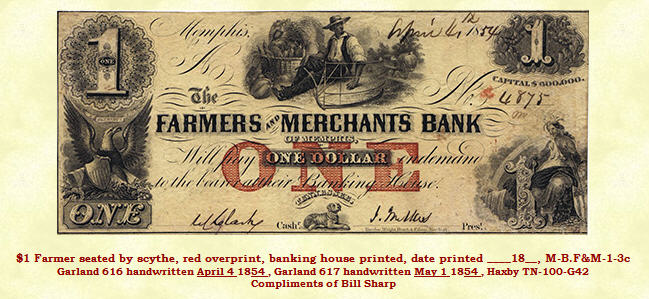
I've always thought that the area of U.S. obsolete notes remains the wild west of paper money; there is much in the field that has yet to be discovered and mapped. But there are a great many references that have been created over the last century that collectors of state notes can use to help build their collections. Many works have been sponsored by the SPMC over the last 50 years. Here is a partial list of titles -- I am sure there are others still missing in my library:
Widespread counterfeiting of the first issue of fractional currency (Postage Currency) led Spencer Morton Clark to state that in order to protect the public, a new issue was needed. The second issue (sometimes referred to as the first issue of Fractional Currency) was released on October 10, 1863 and ended on February 23, 1867. The total of all four denominations was 161,341,194 notes with a face value of $23,164,483.65. It was estimated that 27,567,597 notes were still extant in 1884.
When I started collecting small size notes, information regarding the number of star notes printing was often not available. For over thirty years I have been recording serial number data for star notes I observed or appeared in auction. I have been able to calculate several star note printings from my observations.
About a year ago, I concluded my blog series on Large Size Replacement Nationals. Since then, I've given a presentation and printed an 8-page handout for Memphis 2013. The presentation (it can be downloaded here: https://www.spmc.org/member-presentations) was well received and was the best attended seminar at the convention. An article is forthcoming in Bank Note Reporter.
My first post is an introduction of myself. I would consider myself a hardcore collector of small size US currency. My first introduction to currency collecting was in the late 1960s when my grandmother was actively searching for $1 FRN Barr notes. At that point I started looking at all notes. I bought my first currency book shortly thereafter.
In the 1970s I was pulling circulated $1 FRN star notes out of circulation. While none were worth more than face, I still regarded them as rare.
A Green Thread in Fractional Currency
In the mid 1800’s, the majority of transactions between the general public and merchants were in sums of less than one dollar, making small change necessary. Prices of things were much less than what they are today. A quarter represented a good deal of money at the time. Three cents could buy you a newspaper or a ride. Five cents would get you a glass of beer and lunch. The shots at Fort Sumter that launched the Civil War didn't ring out until April 12, 1861, but even before the Civil War began, people worried about the stability of the currency and began hoarding gold and then silver.
Privacy Policy | Terms of Service © 2026 SPMC Inc. All Rights Reserved.